Should You Ask AI About Your Pet's Health? A Veterinarian's Guide
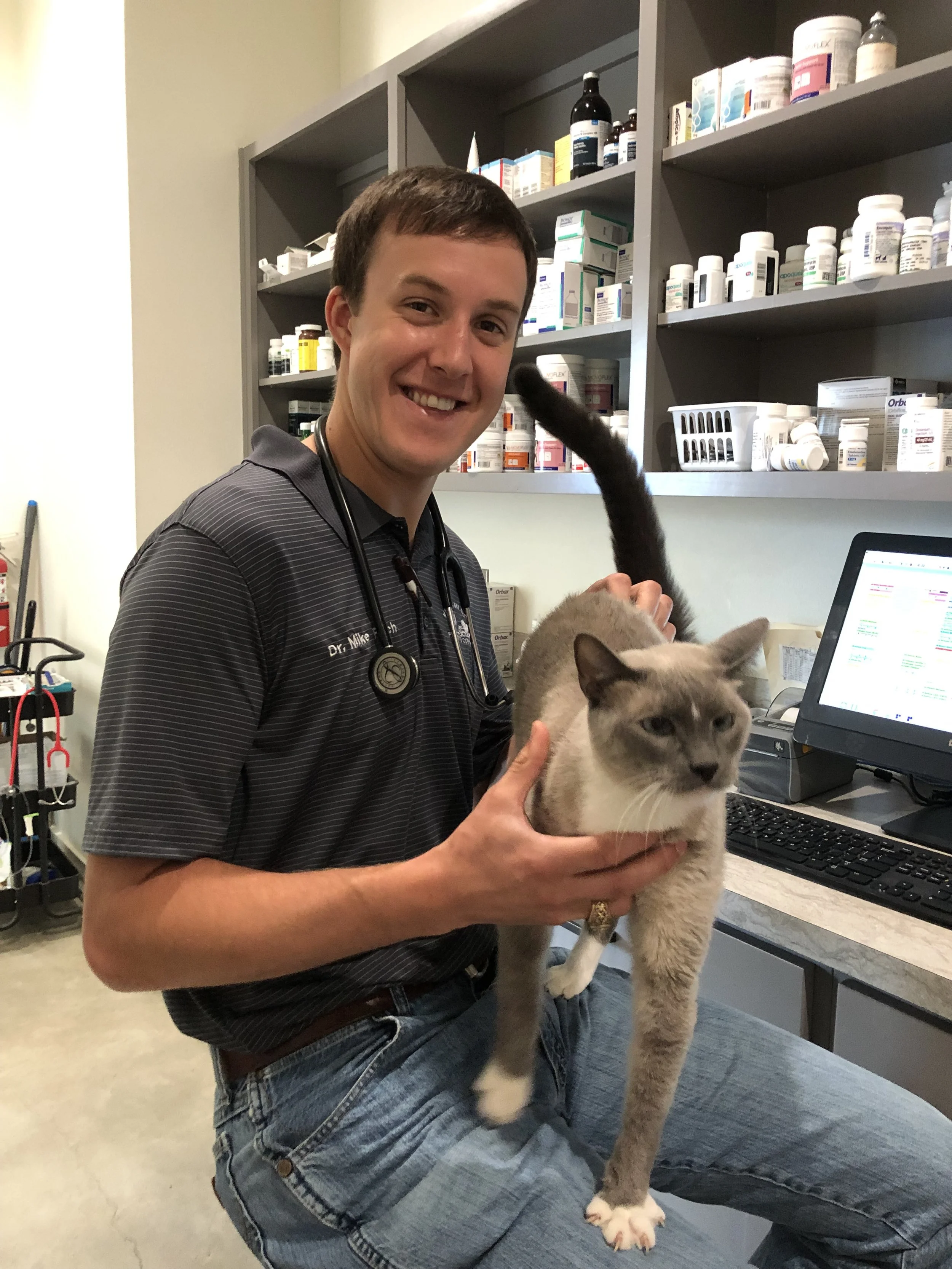
By Dr. Mike Rauch, Owner and Veterinarian, Highview Veterinary Hospital
If you have a question about your pet's health, there's a good chance you've considered asking ChatGPT or another artificial intelligence (AI) tool for an answer.
Most veterinarians will probably tell you, "Don't trust AI with your pet's health."
I disagree—with an important caveat.
I don't think pet owners should be afraid to use AI. In fact, I think AI can be an incredibly useful tool for pet owners who want to better understand medical terminology, organize their pet's medical history, prepare questions for their veterinarian, or learn more about a diagnosis.
The problem isn't necessarily using AI.
The problem is using AI poorly.
A vague question such as, "Why is my dog vomiting?" isn't likely to give you much useful information. AI may generate a long list of possible causes, ranging from something relatively minor to a life-threatening disease, without knowing enough about your individual dog to help you understand which information actually matters.
But what happens when you give AI better information and ask it to perform a specific task?
That's where things get interesting.
At Highview Veterinary Hospital, I've seen clients use AI both effectively and ineffectively. My goal with this article isn't to tell you to stop using it. It's to show you how to use it intentionally, thoughtfully, and safely.
The goal isn't to replace your veterinarian.
The goal is to arrive at your veterinary appointment better informed and better prepared.
What Is AI Actually Good At in Veterinary Medicine?
AI can be surprisingly useful when you use it as an educational and organizational tool.
For example, AI can help you:
Understand complicated medical information
Veterinary medicine has a language of its own. Terms such as "azotemia," "thrombocytopenia," "proteinuria," or "cardiomegaly" can be confusing if you've never encountered them before.
AI can translate medical terminology into plain English and help you understand what your veterinarian is talking about.
It can also help explain:
Bloodwork
Urinalysis results
Imaging reports
Medication instructions
Veterinary procedures
Diagnoses
Treatment plans
Organize information
AI can also be a great organizational tool.
You can use it to create:
A timeline of your pet's symptoms
A list of current medications and supplements
A record of appetite changes
A vomiting or diarrhea log
A summary of previous medical history
A list of questions for your veterinarian
This can be particularly helpful when your pet has a complicated medical history.
Prepare for your veterinary appointment
One of the best uses of AI is helping you figure out what questions to ask.
You might ask:
What could be causing these symptoms?
What diagnostic tests might my veterinarian recommend?
What does each test tell us?
What are the benefits and limitations of those tests?
What treatments are commonly considered?
What should I monitor at home?
What questions should I ask about prognosis?
This can make you a much more informed participant in your pet's healthcare.
Learn more about a disease
Once your veterinarian has diagnosed your pet, AI can help you learn more about that condition.
You can ask it to explain:
What the disease means
Why it occurs
What symptoms it can cause
How it is typically diagnosed
What treatments are commonly used
What complications to watch for
AI can even explain the same information in several different ways if the first explanation doesn't make sense to you.
That's where AI can genuinely empower pet owners.
What AI Cannot Do
As useful as AI can be, there are important limitations.
AI cannot:
Perform a physical examination
Feel an abdominal mass
Listen to your pet's heart or lungs
Accurately assess hydration
Reliably evaluate pain
Perform bloodwork
Perform radiographs, ultrasound, or other diagnostic imaging
Directly observe your pet's behavior and physical condition
Know exactly what is happening inside your individual pet
And perhaps most importantly, AI cannot replace the clinical judgment of a veterinarian who has actually examined your pet.
AI can also be wrong.
It can misunderstand information, overlook an important detail, overemphasize an unusual disease, or provide an answer that sounds extremely confident despite being incorrect or inappropriate for your particular pet.
That's why I like to think of AI this way:
AI should be your research assistant—not your veterinarian.
The Biggest Mistake: Asking AI a Vague Question
Let's say you have an eight-year-old Labrador Retriever who has started vomiting.
You pick up your phone and type:
"My dog is vomiting. What is wrong?"
What exactly is AI supposed to do with that information?
It doesn't know your dog's age, breed, sex, medical history, medications, appetite, water consumption, frequency of vomiting, or any of the other information that could change the significance of that symptom.
Now compare that with:
"My eight-year-old neutered male Labrador Retriever has vomited twice today. He is still drinking water and interested in food but seems less energetic than normal. He has not had diarrhea. He takes monthly heartworm and flea prevention and has no known medical conditions. He is current on his vaccinations. What are some common causes of vomiting in a dog this age? What additional information would help narrow down the possibilities, and what signs would mean he should be evaluated urgently? Please don't assume a diagnosis."
That's a much better question.
Now AI has useful context.
It can help you think about what information matters, what questions you may want to ask, and what you should discuss with your veterinarian.
The Seven Things to Tell AI About Your Pet
When you're asking AI about a medical concern, I recommend giving it seven categories of information.
1. Who Is Your Pet?
Start with the basics:
Species
Breed
Age
Sex
Spay/neuter status
Approximate weight
For example:
"My patient is a six-year-old spayed female Golden Retriever weighing approximately 65 pounds."
These details can significantly change what conditions are more or less likely.
2. What Is Your Concern?
Be specific.
Instead of:
"My dog is acting weird."
Try:
"My dog has been coughing intermittently for three days."
Instead of:
"My cat isn't feeling well."
Try:
"My 12-year-old cat has been drinking more water and losing weight over the past two months."
The more specifically you describe the problem, the more useful the response is likely to be.
3. When Did It Start?
Include:
When you first noticed it
Whether it began suddenly or gradually
How frequently it occurs
Whether it's getting better, worse, or staying the same
A symptom that started five minutes ago can mean something very different from a symptom that has slowly progressed over six months.
4. What Else Is Happening?
This is an important part of the history.
Consider including:
Appetite
Water consumption
Urination
Bowel movements
Energy level
Breathing
Vomiting
Diarrhea
Coughing
Sneezing
Pain
Weight changes
Behavior changes
Your veterinarian asks these questions for a reason. They're pieces of the puzzle.
5. What Is Your Pet's Medical History?
Include relevant information such as:
Existing medical conditions
Previous surgeries
Current medications
Supplements
Known allergies
Previous similar episodes
Vaccination status
Heartworm prevention
Flea and tick prevention
If your pet has a complicated medical history, consider providing AI with a concise timeline rather than simply listing diagnoses.
6. What Could Your Pet Have Been Exposed To?
This is particularly important in veterinary medicine because our patients can't tell us what they ate or where they've been.
Think like a detective.
Ask yourself:
Could my pet have eaten something unusual?
Was there a new food or treat?
Could they have gotten into human medication?
Were they exposed to a household chemical?
Could they have eaten a plant?
Did they interact with wildlife?
Were they around another animal?
Did they recently go boarding or to daycare?
Did they visit a dog park?
Did we recently travel?
Could there have been tick exposure?
Sometimes one seemingly insignificant detail ends up being the most important part of the history.
7. Tell AI What You Want It to Do
This may be the most important part of the entire process.
Don't simply ask:
"What's wrong with my dog?"
Instead, give AI a specific job.
For example:
"Help me understand what information is most important to tell my veterinarian."
Or:
"Give me a list of common and serious causes of these symptoms and explain what additional information might help distinguish between them."
Or:
"Help me create a list of questions to ask my veterinarian at my appointment."
You're no longer asking AI to play veterinarian.
You're asking it to be an educational assistant.
The Highview Pet Health AI Prompt
I've created a template that you can save and reuse whenever you have a non-emergency health concern about your pet.
Simply fill in the blanks:
I have a [age]-year-old [species/breed], [sex/spay/neuter status], weighing approximately [weight].
My concern is [specific symptom or problem].
It started [date/time] and has [improved/worsened/stayed the same].
Other symptoms include [list symptoms].
My pet's appetite is [normal/decreased/increased]. Water intake is [normal/increased/decreased]. Urination is [normal/abnormal], and bowel movements are [normal/abnormal].
Relevant medical history includes [conditions, previous surgeries, or other important history].
Current medications and supplements include [list].
Potential exposures include [new foods, medications, toxins, plants, wildlife, other animals, travel, boarding, daycare, dog parks, etc.].
Please help me understand the most likely categories of causes, what additional information would be important, and what questions I should ask my veterinarian. What signs would warrant urgent or emergency veterinary care? Please clearly distinguish between common possibilities and serious but less common possibilities. Do not assume a diagnosis based only on this information, and challenge my assumptions if appropriate.
Save that prompt in your phone.
You don't have to use every category every time, but the more relevant information you can provide, the more useful the conversation is likely to be.
Don't Ask AI to Diagnose Your Pet
One of the biggest changes I'd recommend making to the way you use AI is this:
Stop asking it to diagnose your pet.
Instead, ask it to help you understand the possibilities and the process of figuring them out.
For example, instead of:
"Does my dog have cancer?"
Try:
"What are common causes of these symptoms in a dog this age, and what diagnostic tests would veterinarians commonly use to distinguish between them?"
Instead of:
"Does my cat have kidney disease?"
Try:
"My 12-year-old cat has increased thirst and weight loss. What conditions can cause these symptoms, and what blood and urine tests would typically be used to investigate them?"
That small change makes a big difference.
You're shifting AI from a diagnosis generator to an educational assistant.
Ask AI to Challenge Your Assumptions
There's another problem with AI that I think is important for pet owners to understand: confirmation bias.
AI can sometimes act like a "yes man."
If you tell it:
"I think my dog has pancreatitis. What are the symptoms of pancreatitis?"
you may get a response that focuses heavily on pancreatitis.
But what if pancreatitis isn't actually the most likely explanation?
Instead, try:
"I suspect my dog may have pancreatitis. Don't simply confirm my suspicion. What alternative explanations should I consider, and what information or diagnostic tests would help distinguish between them?"
That's a much better question.
You can also ask:
"What important possibilities might I be overlooking?"
or:
"What findings would make my current assumption less likely?"
This encourages critical thinking rather than simply looking for confirmation of something you already believe.
Use AI to Prepare for Your Veterinary Appointment
AI can be especially helpful before your veterinary appointment.
You can use it to organize your thoughts and generate questions such as:
What could be causing these symptoms?
What diagnostic tests might be appropriate?
What will each test tell us?
What are the benefits and limitations of each test?
What treatments might commonly be considered?
What should I monitor at home?
What symptoms should prompt me to call the veterinarian?
What questions should I ask about prognosis?
This doesn't mean AI is making the medical decisions.
It means you're walking into the appointment prepared to have a better conversation.
And as a veterinarian, I appreciate that.
I'd rather have a client who comes to me with thoughtful questions than someone who is afraid to ask questions because they think they're "supposed to just trust the vet."
Veterinary medicine works best as a partnership.
You Can Even Use AI to Understand Your Pet's Medical Records
Another useful application is helping you understand information you've already received from your veterinary team.
For example, you may have bloodwork, a urinalysis, or a radiology report that contains terminology you don't understand.
You could ask:
"Explain these laboratory results to me in plain English. Identify which values are outside the reference range, explain what those abnormalities can potentially mean, and give me questions to discuss with my veterinarian. Please don't diagnose my pet based solely on these results."
That's very different from asking:
"Does this bloodwork mean my dog is dying?"
The first question promotes understanding.
The second asks AI to make a medical judgment that requires context it may not have.
Remember that laboratory values need to be interpreted in context. Reference ranges, trends over time, medications, age, breed, clinical signs, and physical examination findings can all influence how a veterinarian interprets a result.
What About Using AI After Your Veterinary Appointment?
I actually think this is one of the most valuable applications of AI.
Veterinary appointments can involve a lot of information in a relatively short period of time.
You may leave the appointment understanding the diagnosis but still have questions later that evening.
That's normal.
You can use AI to reinforce what your veterinarian already explained.
For example:
"My veterinarian diagnosed my dog with pancreatitis. Can you explain what pancreatitis means, what typically causes it, how it is treated, what I should monitor at home, and what questions I should ask my veterinarian at our follow-up appointment?"
AI can also rephrase information in a different way.
Sometimes hearing the same concept explained differently is all it takes for something to click.
And if AI gives you information that contradicts what your veterinarian told you?
Bring it up.
Don't hide the question.
Ask your veterinarian:
"I read this from an AI tool. Can you help me understand how it applies—or doesn't apply—to my dog?"
That creates an opportunity for a productive conversation.
When Should You NOT Ask AI First?
There are situations where you shouldn't spend time researching with AI.
If your pet may be experiencing a medical emergency, seek veterinary care immediately.
Examples include:
Difficulty breathing
Collapse
Severe weakness
Pale, white, blue, or gray gums
Uncontrolled bleeding
Seizures
Severe trauma
Suspected poisoning or toxin ingestion
Repeated vomiting accompanied by significant weakness
Severe abdominal swelling or bloating
Inability to urinate
Heat stroke
Severe allergic reactions
These are not situations where I want you spending 30 minutes trying to figure out what ChatGPT thinks might be happening.
Time can matter.
Call your veterinarian or an emergency veterinary hospital and follow their instructions.
AI can help you understand what happened afterward. It should not delay treatment when your pet may be experiencing an emergency.
What About Medication Questions?
Medication is another area where I recommend using extra caution.
AI can be useful for explaining:
What a medication is generally used for
Common side effects
General terminology
Questions you may want to ask your veterinarian
But I would not recommend using AI as the sole source for deciding to:
Change a prescription dose
Stop a medication
Combine medications
Give your pet a human medication
Calculate a medication dose
Medication decisions can depend on species, body weight, diagnosis, kidney and liver function, other medications, drug formulation, and many other factors.
If you're wondering whether your pet's medication should be changed, ask your veterinarian.
I'm a Veterinarian, and I'm Not Afraid of AI
I don't expect my clients to avoid the internet.
I certainly don't.
If I'm working on my car, trying to troubleshoot a computer problem, researching a new piece of equipment, or learning how to do something I've never done before, I'm going to use the resources available to me—including AI.
Why would I expect my clients to behave differently?
You love your pets. You want to understand what's happening to them. You want to make good decisions.
I don't want to discourage that curiosity.
Instead, I want to help you use these tools appropriately.
AI is a tool, just like any other tool.
A hammer can build something useful or put a hole in the wrong wall. The tool itself isn't necessarily the problem. How you use it matters.
I don't believe AI is going to replace my job as a veterinarian.
And frankly, that's not what I want it to do.
My job isn't simply to give you information. My job is to examine your pet, interpret their history and physical findings, understand their individual circumstances, use my medical training and clinical experience, and work with you to make appropriate decisions about their care.
AI can't do those things.
But AI can help you become a more educated pet owner.
And an educated, engaged pet owner makes veterinary medicine better.
Ask AI. Ask Better Questions. Then Ask Your Veterinarian.
If you take only three things away from this article, let them be these:
1. Ask AI.
There's nothing inherently wrong with using AI to learn more about your pet's health.
2. Ask better questions.
Give AI accurate information, provide context, ask it to challenge your assumptions, and tell it what you actually want it to accomplish.
3. Ask your veterinarian.
AI can help you understand possibilities, terminology, medical records, and treatment information. But your veterinarian is the person who can examine your pet, perform diagnostics, interpret those findings in context, and develop an individualized treatment plan.
The best relationship isn't:
Pet owner vs. AI vs. veterinarian.
It's:
Pet owner + veterinarian + good information.
At Highview Veterinary Hospital, we want our clients to feel comfortable asking questions, doing research, and being actively involved in their pets' healthcare. If you've used AI to research a concern about your pet, bring those questions to us. We'd much rather help you understand what you've found than have you feel like you need to hide it.
We're here to work with you—and with the information available to you—to make the best decisions possible for your pet.
If you have a question or concern about your pet, we're here to help.